Every image on this page was captured through a telescope I designed in Fusion 360 and 3D printed in PET-CF filament. If you want the engineering story behind the scopes themselves, I wrote about that in Designing Telescopes for 3D Printing. This post is about what came out the other end.
The setup for all of these: a ZWO ASI533MC Pro on a Proxisky UMi20S harmonic drive mount, guided with a SVBONY 60mm and a ZWO guide camera. The telescope is either my 114mm f/3.95 “Squat” or the 150mm f/5 “Big Guy,” both Newtonian astrographs. I’ll note which scope for each target.
I’m not going to pretend these are perfect. Some of them I’d reshoot tomorrow if I had the clear skies. That’s the thing about this hobby: you learn something new with every target, and the old images start looking like rough drafts.
Cygnus Wall
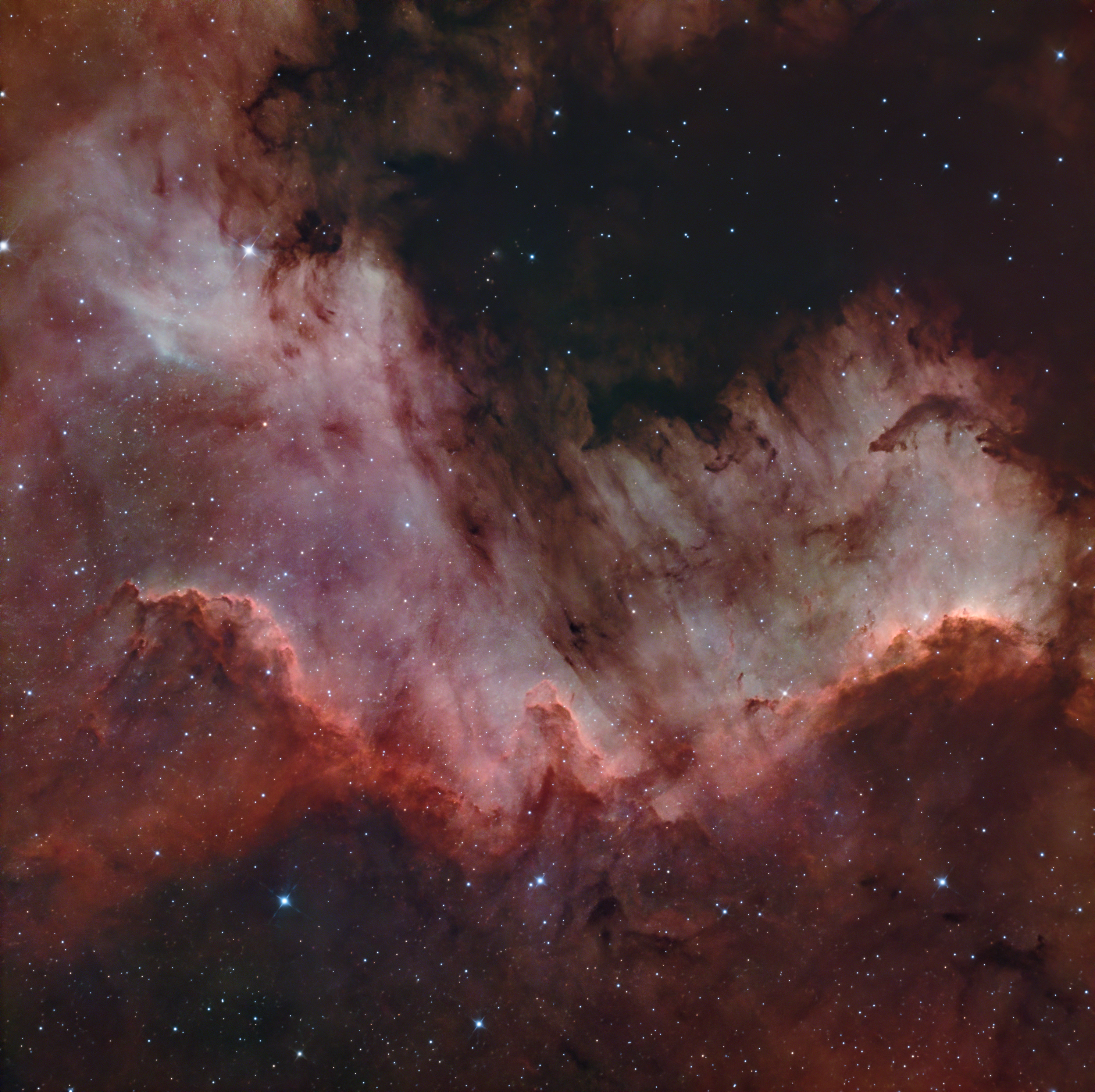
14 hours of integration. This is my longest single project and the image I’m most proud of. The Cygnus Wall is the brightest ridge of the North America Nebula (NGC 7000), a massive emission nebula in the constellation Cygnus. The “wall” is the boundary where ionized hydrogen meets dense molecular clouds, and the texture in that transition zone is what makes this target so satisfying.
Fourteen hours sounds like a lot, and it is. That’s multiple nights of imaging, stacking all the subs together in PixInsight. But the signal-to-noise ratio tells the story. The faint structure in the outer regions only emerged after about 8 hours. The last 6 hours refined it.
Shot through the 150mm f/5 Big Guy.
Horsehead and Flame Nebulae
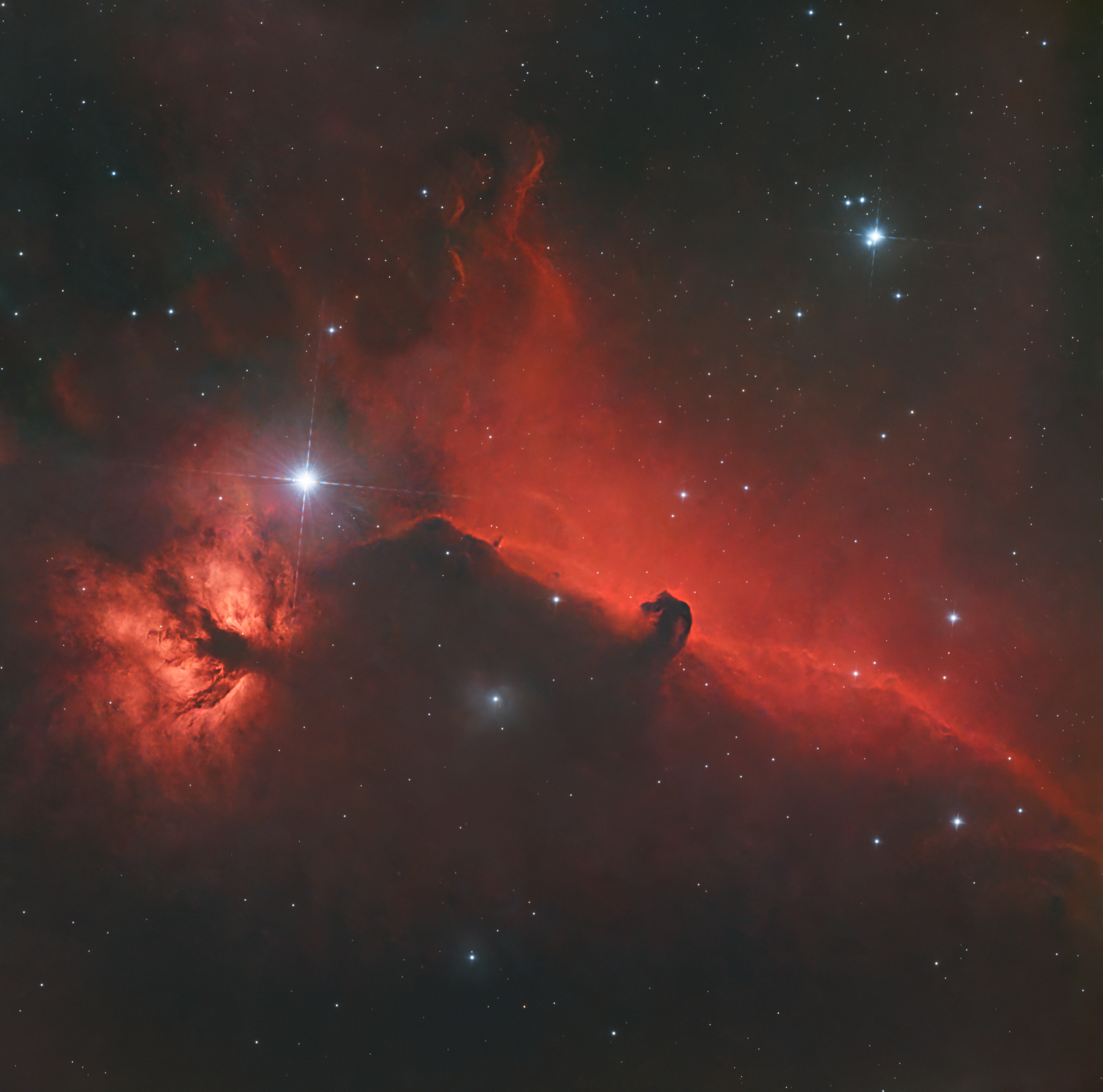
About 2-3 hours of integration. The Horsehead is everyone’s first “I need to shoot that” target. IC 434, about 1,375 light-years away in Orion. The dark nebula is a cloud of dense dust silhouetted against a curtain of glowing hydrogen. Next to it, the Flame Nebula (NGC 2024) burns around the star Alnitak.
This was one of my earlier images with the 114mm f/3.95 Squat, and it’s the one I keep coming back to. The Horsehead is a great benchmark target because you can always go deeper. More integration time reveals fainter hydrogen streamers trailing off to the right. I can see detail in this version that I couldn’t pull out of my first attempt, but I also know there’s more hiding in there.
Orion and Running Man Nebulae
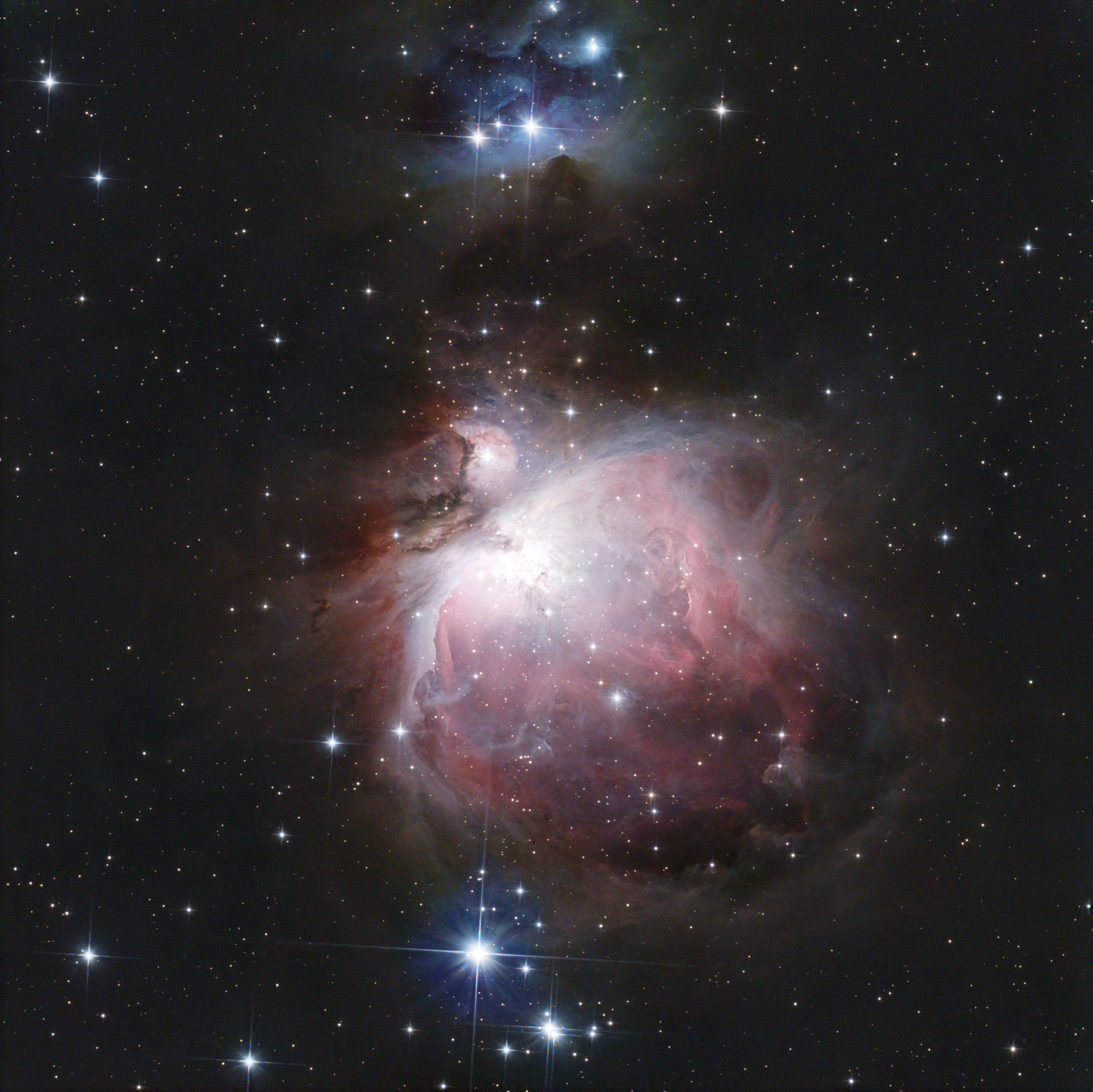
About 2-4 hours of integration. M42. The Great Orion Nebula. Probably the most photographed deep-sky object for good reason: it’s bright, it’s huge, and it has incredible structure at every scale. The Running Man (NGC 1977) sits just above it, a reflection nebula with a cooler blue tone.
The challenge with Orion is dynamic range. The Trapezium cluster at the core is blindingly bright compared to the faint outer nebulosity. You either blow out the core or lose the wings. The standard approach is to shoot multiple exposure lengths and blend them. This version is a compromise, but I’m happy with the color in the outer regions and the dust lanes threading through the nebula.
Shot through the 114mm f/3.95 Squat.
Rosette Nebula
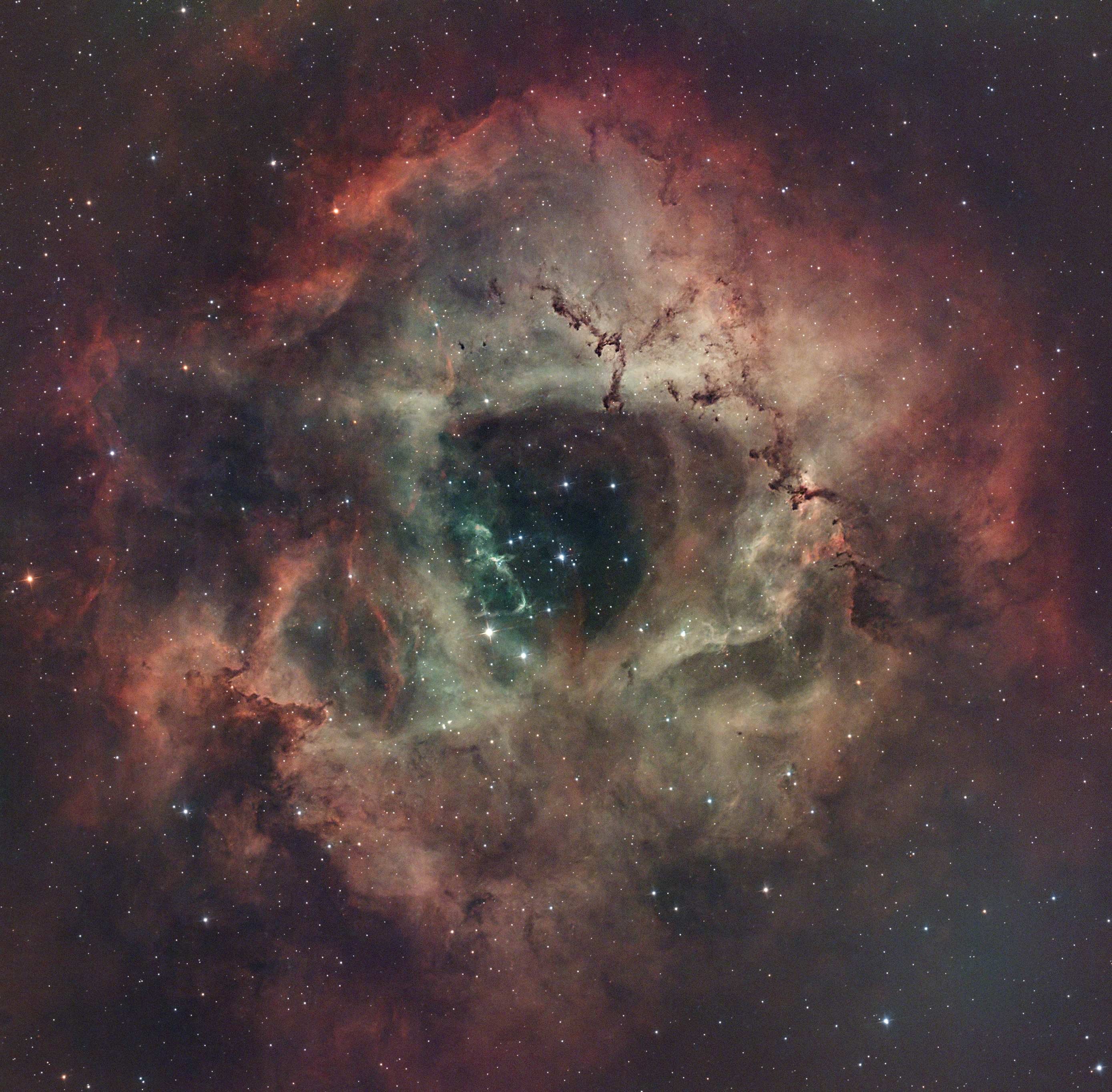
NGC 2237, about 5,000 light-years away in Monoceros. A massive emission nebula with an open star cluster (NGC 2244) at its center. The cluster’s stellar winds have carved out the hollow center, and the entire structure spans about 130 light-years across.
This is one of those targets that rewards integration time and wider fields of view. The 114mm f/3.95 Squat is a natural fit here because the fast focal ratio collects light quickly and the short focal length frames the whole nebula. About 4-6 hours of integration. The dark globules threading through the shell are Bok globules, dense knots of gas and dust that may be collapsing into future star systems. The color palette in this one came together well: the teal in the center from OIII emission, the red hydrogen-alpha shell, and the warm dust at the edges.
Elephant Trunk Nebula
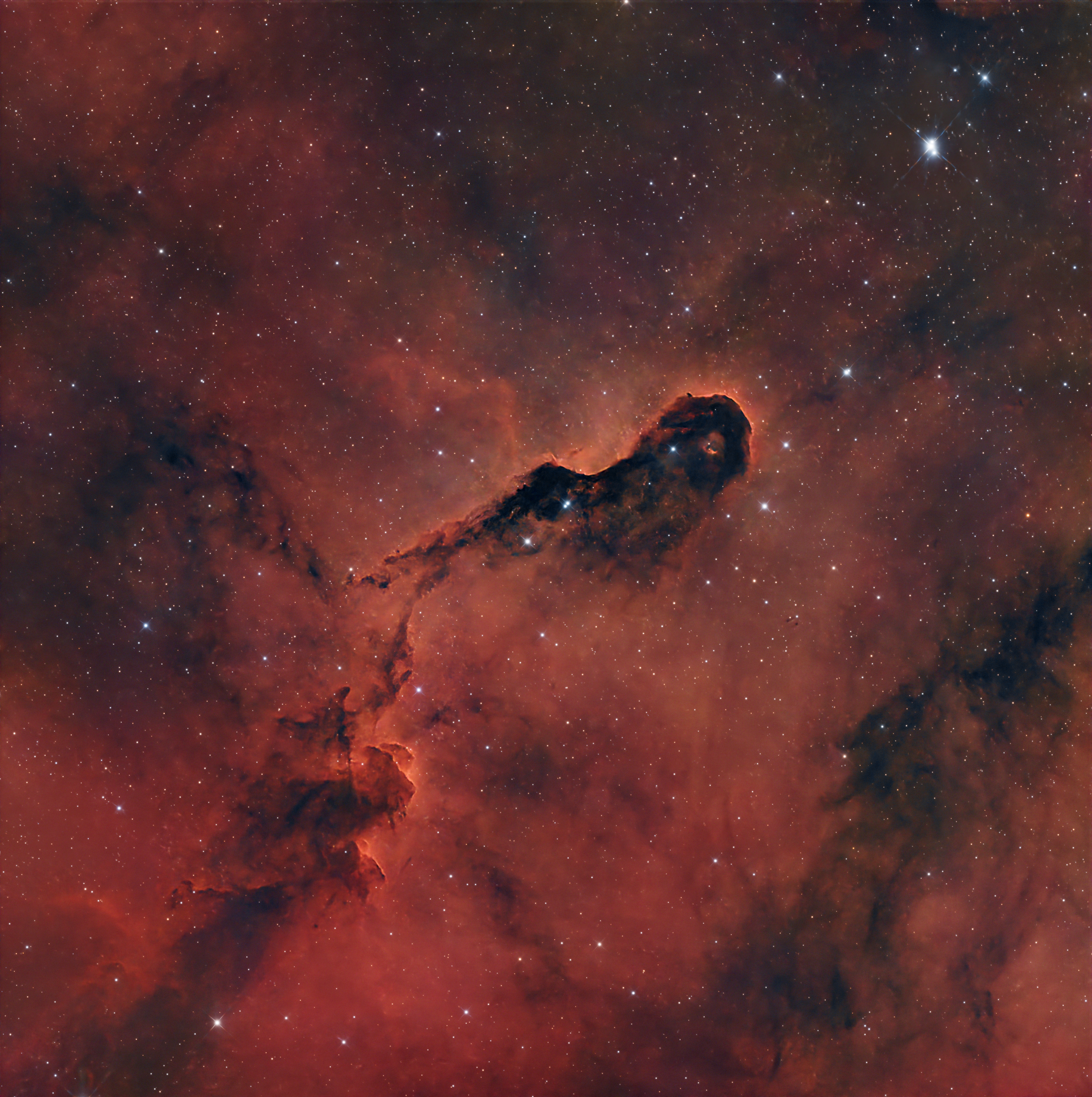
9 hours of integration. IC 1396A, the Elephant Trunk, is a dense column of gas and dust inside the much larger IC 1396 emission nebula in Cepheus. About 2,400 light-years away. The “trunk” is a concentration of interstellar gas being compressed by radiation from a nearby massive star, and there’s active star formation happening inside it.
The dark pillar against the glowing hydrogen backdrop gives this target a dramatic, almost three-dimensional quality. The rim lighting along the trunk’s edge is where ionized gas meets the dense molecular cloud. Nine hours through the 150mm f/5 Big Guy brought out the faint nebulosity surrounding the trunk and the subtle gradients in the background.
Pelican Nebula
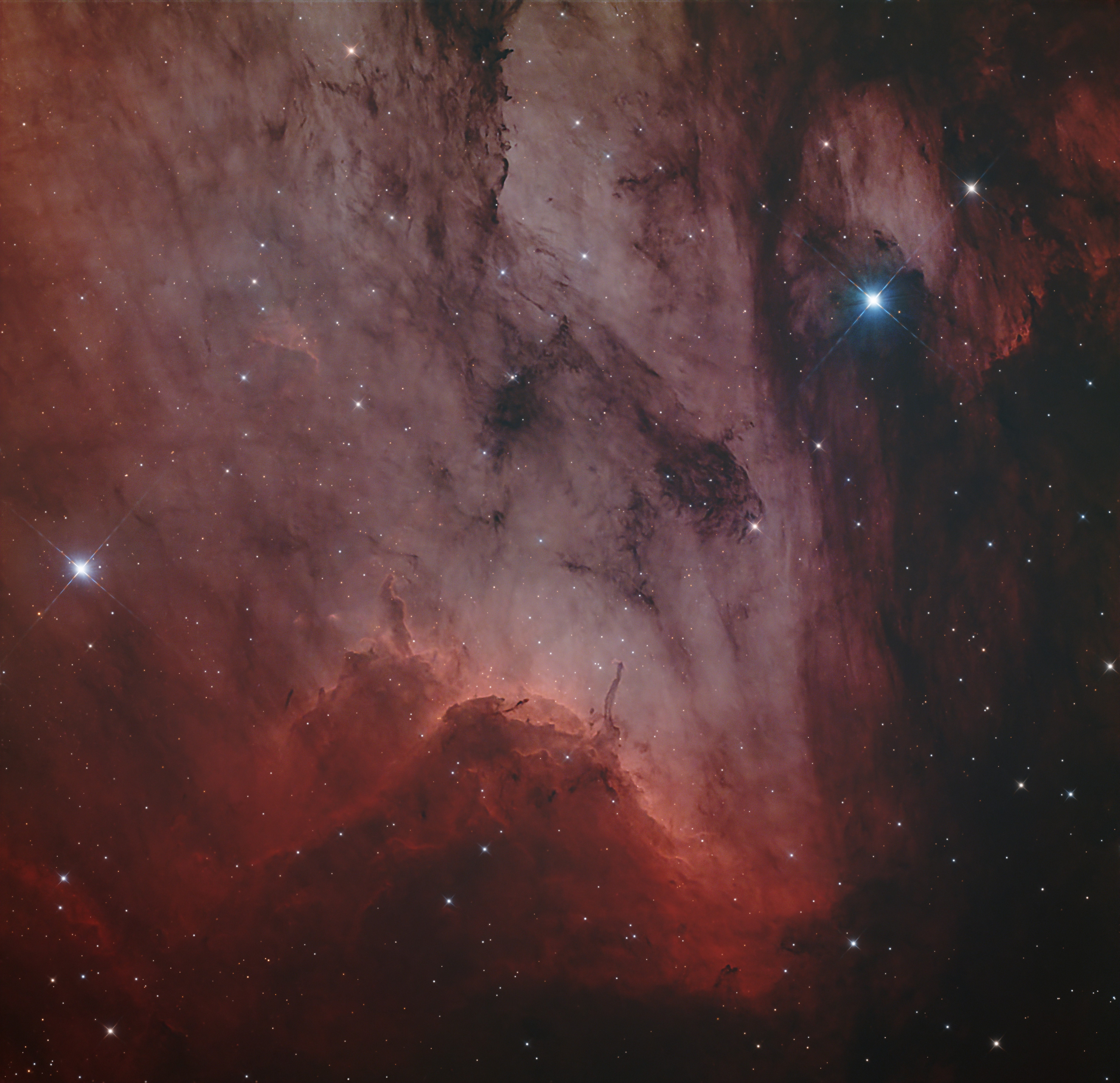
8 hours of integration. IC 5070, the Pelican Nebula, is the other half of the North America Nebula complex in Cygnus. They’re actually the same cloud of gas separated by a dark molecular cloud (LDN 935) in the foreground. The Pelican’s “jaw” region at the bottom of this image is where most of the interesting action is: ionization fronts, Herbig-Haro objects, and active star formation.
The texture in this one is what I love. The interplay between the ionized hydrogen and the dark dust creates these ridges and valleys that almost look geological. Eight hours through the 150mm f/5 Big Guy was enough to bring out the faint emission in the upper regions, but I think this target could benefit from dedicated narrowband data to really separate the OIII and Ha structures.
Whirlpool Galaxy (M51)
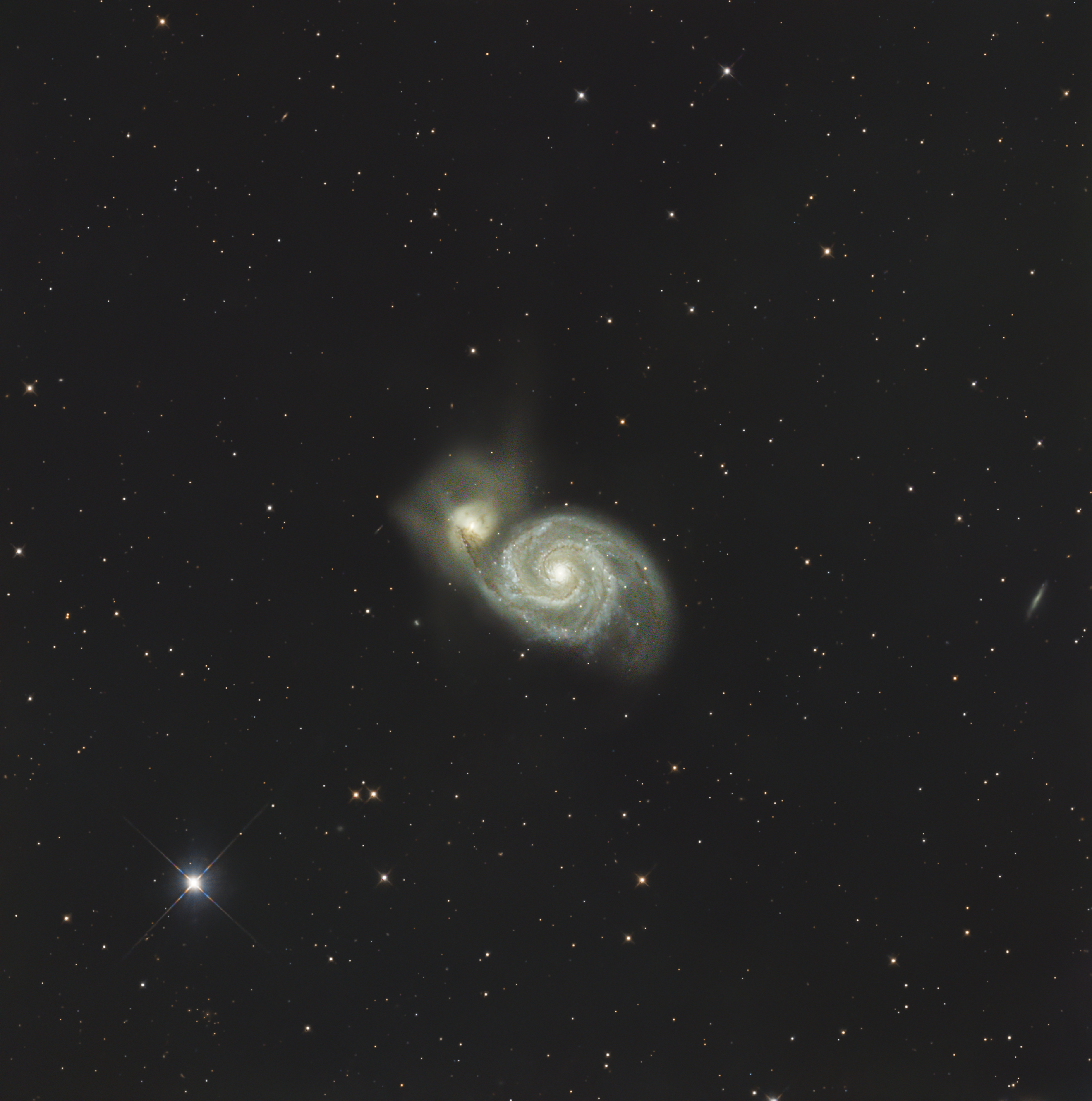
8 hours of integration. M51, the Whirlpool Galaxy, about 23 million light-years away in Canes Venatici. A grand-design spiral galaxy interacting with its smaller companion NGC 5195. The tidal bridge connecting the two is visible in this image.
Galaxies are a different beast than nebulae. They’re small, faint, and you need every photon you can collect. Eight hours through the 150mm f/5 Big Guy is a solid start. You can see the spiral structure and the dust lanes, but the individual HII regions in the arms are right at the edge of what this setup can resolve. There are also a handful of background galaxies scattered around the field if you look closely.
Dumbbell Nebula (M27)
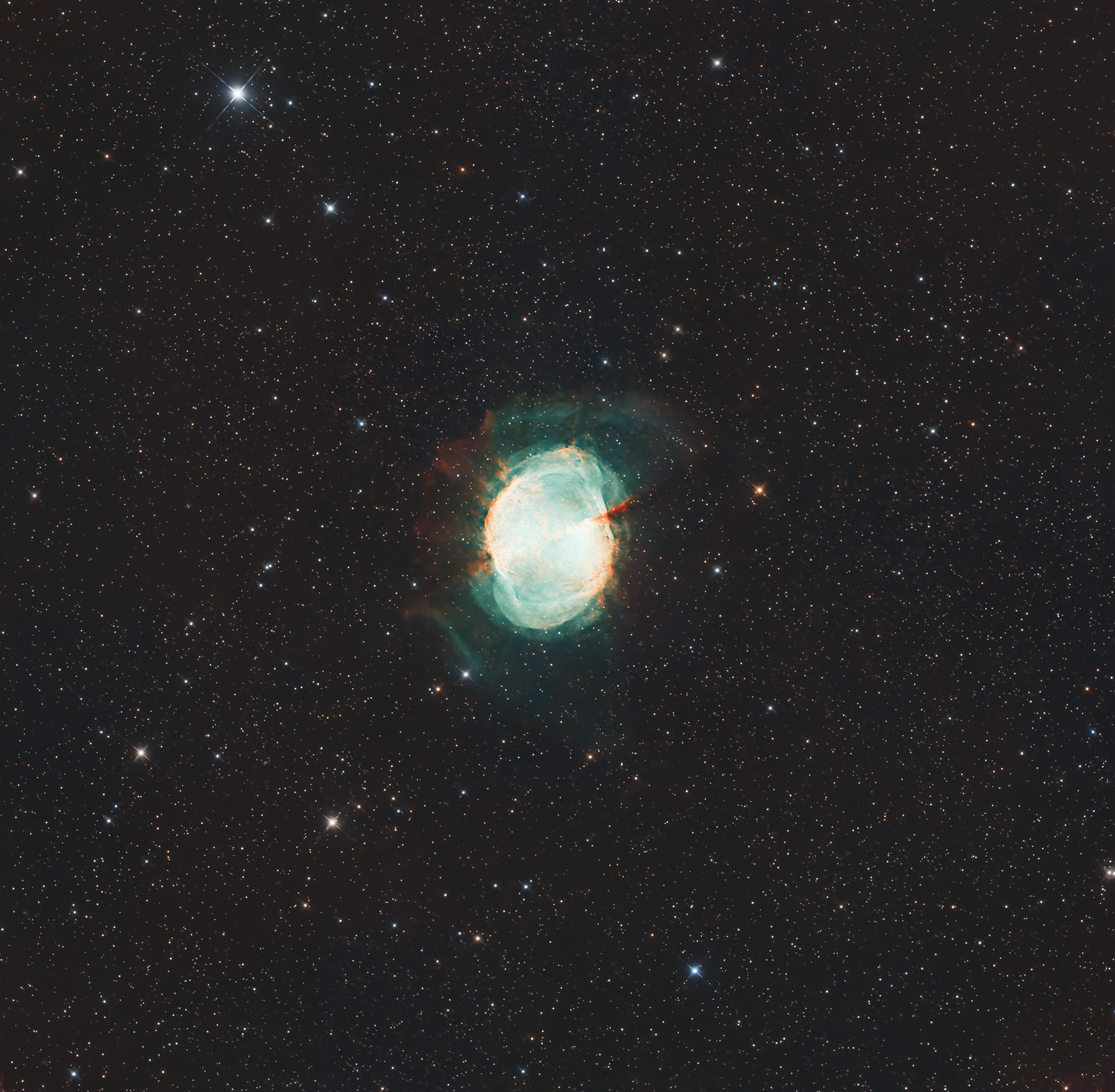
3.5 hours of integration. M27, the Dumbbell Nebula, a planetary nebula about 1,360 light-years away in Vulpecula. This is the remnant of a dead star: the outer layers were ejected as the star exhausted its fuel, and the remaining white dwarf at the center ionizes the expanding shell.
Planetary nebulae are relatively bright and compact, so 3.5 hours through the 150mm f/5 Big Guy was enough to get a clean result. The teal OIII emission dominates the core, with the red hydrogen-alpha wings extending outward. The faint outer halo is just barely visible in this version. That halo is ancient material ejected earlier in the star’s death process, and pulling it out of the noise would probably require double or triple the integration time.
Fishhead Nebula
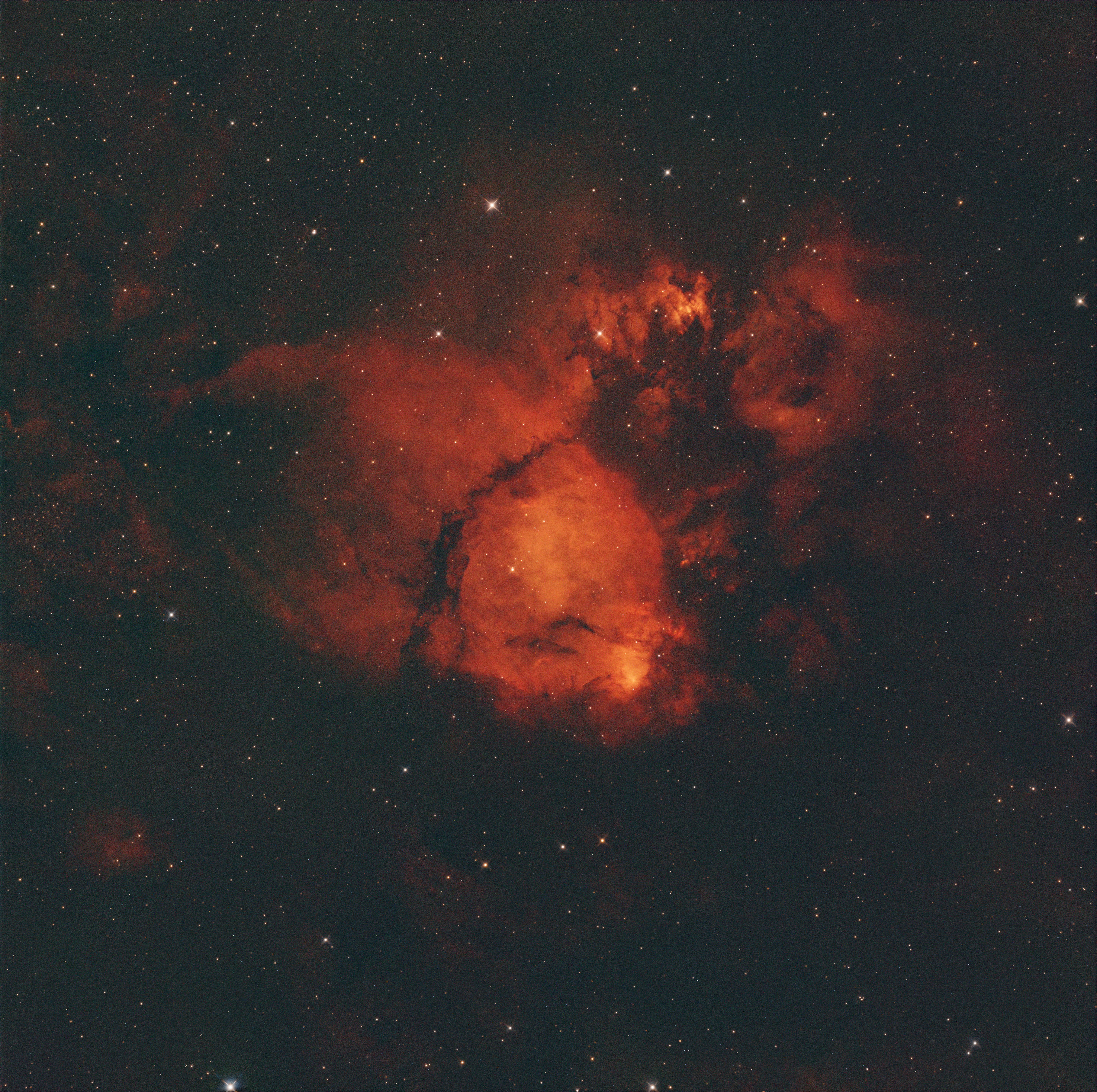
2.5 hours of integration. IC 1795, the Fishhead Nebula, part of the Heart Nebula complex (IC 1805) in Cassiopeia. About 6,000 light-years away. This is a small but detailed emission nebula with complex dark dust structures threading through bright hydrogen gas.
This is one of my shorter integrations through the 150mm f/5 Big Guy and it shows. The signal is there, but the faint outer regions are noisy. The core structure is compelling though: those dark dust lanes cutting through the bright emission create a lot of visual interest in a small area. This is a target I’d reshoot with more time. It deserves 6+ hours to really bring out the faint edges and clean up the background.
Hercules Cluster (M13)
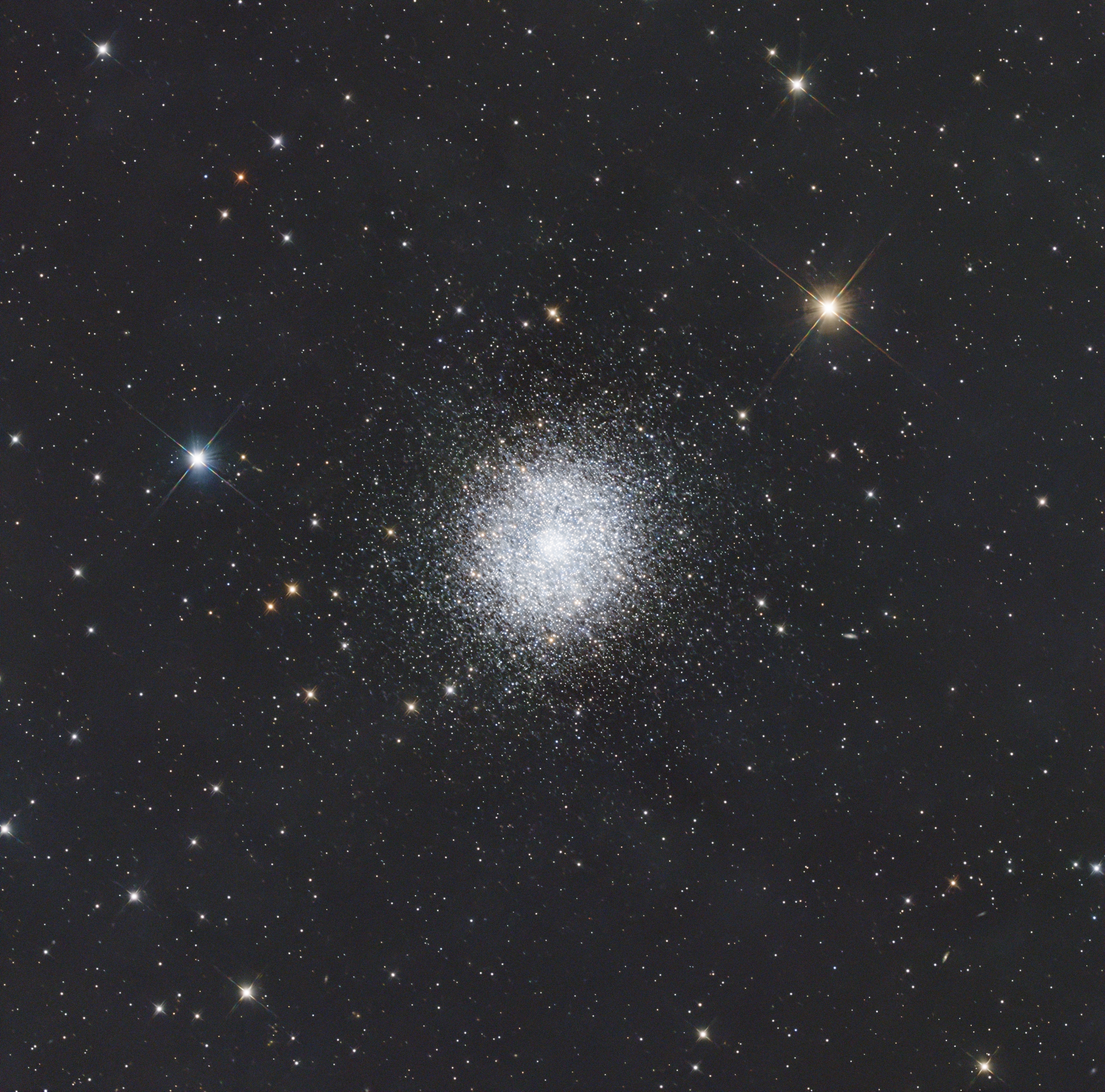
3 hours of integration. M13, the Great Globular Cluster in Hercules. About 22,000 light-years away, containing roughly 300,000 stars packed into a volume about 145 light-years across. One of the brightest globular clusters visible from the northern hemisphere.
Globular clusters are pure resolving-power tests. The question is: can your optics and tracking separate individual stars in the dense core? Shot through the 150mm f/5 Big Guy, the outer regions show clean, round stars and the core has good structure. The diffraction spikes on the brighter stars are from the spider vanes in the printed scope. I’d love to revisit this one with even more focal length to really crack open that dense core.
Seagull Nebula
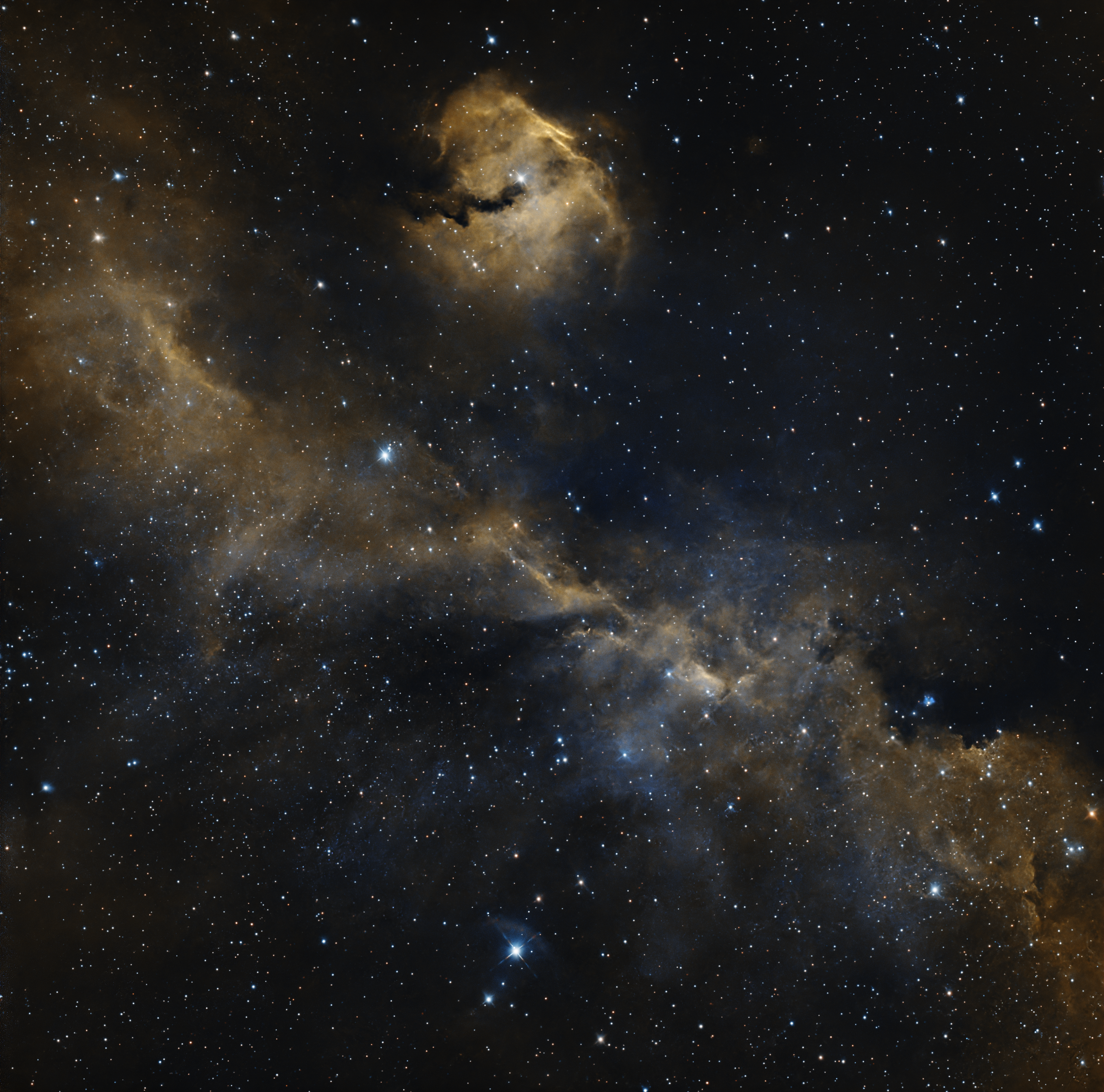
IC 2177, the Seagull Nebula, an emission nebula straddling the border of Monoceros and Canis Major. About 3,650 light-years away. This is a large, faint target that spans several degrees of sky.
About 4-6 hours of integration through the 150mm f/5 Big Guy with an Antlia ALP-T dual-band filter. This image is processed in a HOO palette: Hydrogen-alpha mapped to red, and Oxygen-III mapped to both green and blue. The result is a gold-and-teal color scheme that separates the two emission sources and reveals structure that’s hard to see in broadband. The HOO palette is a common choice for two-filter narrowband imaging, and I think it works particularly well for the Seagull because the OIII emission traces different structures than the Ha, giving the image depth.
The data problem
One thing nobody warns you about: the storage. The ASI533MC Pro shoots 16-bit frames at 3008x3008 pixels. Each sub-exposure is 18.1MB. A typical night might produce 200-400 subs depending on exposure length. That’s 3-7GB per night, per target. The 14-hour Cygnus? That’s multiple nights of data stacked together. We’re talking tens of gigabytes of raw subs for a single finished image.
And you keep all of it. You keep the lights, the darks, the flats, the bias frames. You keep them because you might reprocess in six months when you’ve learned a new technique in PixInsight, or because you want to add more data from a future session. Deleting raw subs feels like throwing away photons you already collected.
Right now I’m sitting on hundreds of gigabytes of astro data across all these targets. It adds up fast. A couple external drives dedicated to nothing but sub-exposures. It’s the unglamorous side of the hobby that nobody posts about.
What I’d do differently
If I could reshoot everything from scratch with what I know now:
More integration time on everything. Every single one of these would benefit from more data. The 14-hour Cygnus proved that to me. There’s always more signal hiding in the noise.
Dedicated narrowband on the emission nebulae. The Seagull in HOO showed me what narrowband can do. I’d love to shoot the Elephant Trunk, Pelican, and Rosette in SHO (Hubble palette) with dedicated Ha, OIII, and SII filters.
More galaxies. M51 is my only galaxy in this set, and galaxies require a different approach: more integration time and excellent seeing conditions. I’d love to get M81/M82 and NGC 7331 through the Big Guy.
Reshoot the Fishhead. 2.5 hours isn’t enough. That target has so much detail hiding in the dust lanes.
The gear
For reference, the full imaging setup behind these images:
- Telescopes: 114mm f/3.95 “Squat” and 150mm f/5 “Big Guy” (both 3D printed, designs on MakerWorld)
- Camera: ZWO ASI533MC Pro (cooled, one-shot color)
- Mount: Proxisky UMi20S (harmonic drive)
- Guide scope: SVBONY 60mm + ZWO guide camera
- Filter wheel: ZWO 5-position EFW
- Narrowband filter: Antlia ALP-T (dual-band Ha/OIII)
- Focuser: Omegon with Gemini auto-focuser
- Processing: PixInsight
If you want the story behind why I design and print the telescopes instead of buying them, read Designing Telescopes for 3D Printing.